




















 EN
EN JA
JA
Choosing a power bank may seem simple at first. But once you start comparing different models, you’ll quickly run into terms like mAh, Wh, voltage, current, charging power, fast charging, and standard charging.
How much capacity do you actually need?
Why can’t a 10,000mAh power bank deliver 10,000mAh directly to your phone?
When should you use fast charging or standard charging?
And what kind of power bank is right for commuting, travel, or outdoor adventures?
The best power bank isn’t necessarily the one with the biggest capacity.
It’s the one that gives you enough power, fits your lifestyle, and is light enough that you’ll actually want to carry it.
Here’s how to choose the right one.
1. Start With Capacity: How Much Power Do You Really Need?
The most familiar power bank specification is mAh, or milliamp-hours.
In general, a higher mAh rating means the battery stores more electrical charge. But mAh alone doesn’t tell you exactly how much power your phone will actually receive.
As a simple guide:
5,000mAh — ideal for commuting, short trips, light hiking, trail run, cycling, and everyday top-ups
10,000mAh — a balanced choice for everyday use, travel, business trips, camping, motorcycle touring, longdistance cycling and longer outdoor activities
20,000mAh+ — better for extended travel, multiple devices, or long periods away from a power outlet
If you want more reliable battery backup without carrying a bulky device, 10,000mAh is often the sweet spot between capacity and portability.
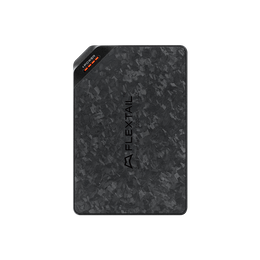
FLEXTAIL Zero Power Bank - Best Outdoor Lightest 10,000mAh Power Bank with Fast Charging
2. What Do mAh and Wh Mean? Why Can’t You Judge Capacity by mAh Alone?
This is one of the most overlooked parts of choosing a power bank.
mAh measures battery charge capacity, while Wh (watt-hours) measures the actual amount of stored energy.
The relationship is:
Wh = mAh × V ÷ 1,000
For example, a battery rated at:
10,000mAh × 3.7V ≈ 37Wh
has roughly 37Wh of theoretical energy storage.
The 3.7V figure represents the nominal voltage commonly used for lithium-ion battery cells.
This is why simply comparing mAh is not always enough. Wh gives you a better picture of how much energy the battery actually stores.
So why can't a 10,000mAh power bank deliver 10,000mAh to your phone?
Because charging is not 100% efficient.
Energy has to go through voltage conversion, circuitry, the charging cable, and your device’s own charging system. Some energy is inevitably lost along the way, often as heat.
For example, suppose a 10,000mAh power bank stores approximately 37Wh and the overall output efficiency is around 85%:
37Wh × 85% ≈ 31.5Wh
That means roughly 31.5Wh may reach the device under those assumed conditions, rather than the full 37Wh.
Actual efficiency varies depending on charging power, voltage conversion, temperature, cable, and the device itself. The 85% figure is therefore an example for understanding the principle, not a fixed efficiency for every power bank.
So don’t think of the mAh printed on the box as the exact amount of power your phone will receive.
3. Fast Charging vs. Standard Charging: Which One Should You Use?
The fastest charging mode isn’t always the best choice.
It depends on what you need at that moment.
Fast Charging: When You Need Power Now
Fast charging is most valuable when you have very little time but need a meaningful battery boost.
For example:
- Your phone is at 10% before you leave
- You need a quick top-up during your commute
- You’re traveling and don’t have time to wait
- You need enough battery for navigation or calls
In these situations, fast charging helps you restore more battery in less time.
If these scenarios sound familiar, fast-charging capability should be one of the key features you look for.
Standard/Efficient Charging: When You Need Longer, Steadier Power
When you’re not in a hurry to charge, standard charging can make more sense.
Lower charging power generally means less instantaneous heat and may reduce some losses during power conversion.
For longer periods of use, overnight charging, or situations where you simply want to keep your device powered, standard charging can be a more practical option.
A versatile power bank shouldn’t force you to choose one approach.
Being able to switch between fast and standard charging gives you more control over how you use your battery.
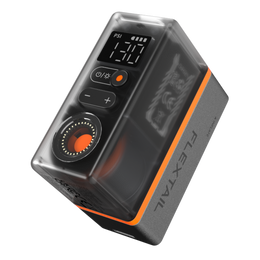
FLEXTAIL Zero Power Bank - Best Outdoor Lightest 10,000mAh Power Bank with Fast Charging
4. Choose a Power Bank Based on Your Usage Scenario
Instead of starting with technical specifications, start with one simple question:
Where will you actually use it?
For Everyday Commuting
If you only need occasional battery top-ups during your commute, while shopping, or at the office, portability is often more important than maximum capacity.
A 5,000mAh power bank can be enough for light everyday use.
It’s especially suitable for people who want to keep their bag or pocket as light as possible.
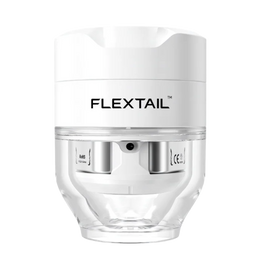
FLEXTAIL ZERO POWER 5,000C-Best Outdoor Lightest 5,000mAh Power Bank
For Short Trips
Short trips usually don’t require a huge power reserve.
If you mainly want enough power to top up your phone while keeping your luggage light, 5,000mAh can be a practical choice.
For longer trips or heavier phone use—such as frequent photography, navigation, and mobile data—a 10,000mAh power bank may be more suitable.
For Hiking, Cycling & Light Outdoor Activities
Outdoor activities require a balance between:
Enough power + easy portability.
For short hikes, cycling, or other light outdoor activities, a compact 5,000mAh power bank can be a great option.
If you expect to use navigation, take photos, or keep your phone connected for longer periods, moving up to 10,000mAh gives you more breathing room.
Material also matters in outdoor scenarios.
For example, carbon fiber can help create a lightweight yet durable design with good resistance to everyday wear, making it a practical choice for outdoor use.

It can also be a great fit for people who work in an office during the week but enjoy hiking, cycling, or other outdoor activities on weekends.
For Emergency Backup
Sometimes the main reason you carry a power bank is simple:
You don’t want your phone to die completely.
That’s where an emergency reserve can be useful.
Some power banks reserve a small portion of battery specifically for emergency use—for example, around 10% Emergency Power.

On a 10,000mAh power bank, 10% represents roughly 1,000mAh of the battery’s nominal capacity.
It won’t fully recharge your phone, but it can provide additional time for essentials such as making a call, using navigation, or staying connected in an emergency.
For travel and outdoor situations, having that final backup can make a meaningful difference.
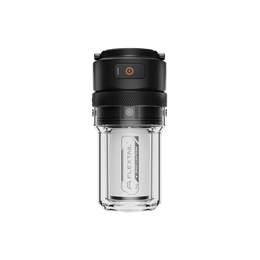
FLEXTAIL Zero Power Bank - Best Outdoor Lightest 10,000mAh Power Bank with Fast Charging
5. How to Choose the Right Power Bank for Your Needs
Now let’s make the decision simple.
I mainly need light everyday charging
Choose:
5,000mAh + compact size + lightweight design
Best for commuting, short trips, and occasional top-ups.
I want a balance between capacity and portability
Choose:
10,000mAh + slim design + fast / standard charging
A strong all-around option for everyday use, travel, and light outdoor activities.
I frequently need quick battery boosts
Prioritize:
Fast-charging power + charging protocol compatibility + a suitable cable
Fast charging works best when the power bank, phone, and cable all support the required standard.
I spend a lot of time outdoors
Prioritize:
Capacity + weight + durability + sustained power delivery
In this case, lightweight construction and durable materials can be just as important as battery capacity.
6. Don’t Forget the Charging Cable
Your power bank may support fast charging, but the cable you use can also affect how much power your device actually receives.
Think of the charging setup as a complete chain:
Charger → Cable → Power Bank → Phone
If one part of the chain cannot support the required power or charging protocol, it may limit the overall charging speed.
That’s why a capable charging cable is more than just an accessory.
Why Does a 65W Charging Cable Matter?
A 65W USB-C charging cable gives you much more flexibility.
It can support a wide range of compatible power banks and devices, so you don’t have to rely on a cable designed for one specific product.
For example, our 65W USB-C Lanyard Cable is designed to support up to 65W of power, making it suitable for fast-charging setups across a variety of compatible power banks and devices.

And you don't have to use it with ZERO POWER.
Even if you use another brand’s compatible power bank, our 65W cable can still be used for fast charging, as long as the power bank, device, and charging protocol support the required power.
In other words, the cable can stay useful even when you switch between different power banks.
One Cable, More Possibilities
A good charging cable should fit into your setup—not lock you into one product.
With a 65W USB-C cable, you can use the same cable across compatible power banks, phones, tablets, and other USB-C devices that support the required charging standard.
And when the cable doubles as a lanyard, it can also be attached directly to your power bank, making it easier to carry and harder to forget.
FLEXTAIL Zero Power Bank - Best Outdoor Lightest 10,000mAh Power Bank with Fast Charging
7. Weight and Thickness May Matter More Than You Think
A power bank is something you’re supposed to carry.
So while capacity matters, whether you actually want to carry it every day matters too.
A 20,000mAh power bank may store more energy, but if it’s too heavy or bulky, it may end up staying at home.
For everyday users, 10,000mAh + a slim, lightweight design can be a much more practical combination.
ZERO POWER 10,000C takes this approach with a 9.9mm ultra-slim design, it’s one of the lightest 10,000mAh power banks in the world, weighing just 145g. If you’re someone who hates carrying a bag or prefers to travel light with just a small one, this is the power bank made for you.
It also uses carbon fiber, helping keep the design lightweight while improving resistance to everyday wear and tear.
That makes it particularly suitable for people who commute during the week but still want a power bank they can take hiking, cycling, or on other outdoor adventures.
8. The Best Power Bank Is the One You’ll Actually Carry
Still not sure which one to choose?
Ask yourself five questions:
1. How much extra power do I usually need?
Just an emergency top-up, or enough to get through most of the day?
2. Where will I use it?
Commuting, short trips, hiking, outdoor activities, or long-distance travel?
3. Do I need fast charging or sustained power?
Choose fast charging when you need a quick battery boost. Choose standard charging when longer, steadier power matters more.
4. How much weight am I willing to carry?
For something you’ll carry every day, lightweight and slim can matter more than maximum capacity.
5. Do I want an emergency reserve?
If you often worry about your phone dying completely, look for a power bank with a dedicated emergency power mode.
Once you answer these questions, choosing a power bank becomes much easier.
Final Thoughts: How to Choose a Power Bank That Actually Fits Your Life
Choosing a power bank is really about finding the right balance between:
Enough capacity + the right charging speed + portability + your actual usage scenario.
If you only need light battery backup, a 5,000mAh power bank may be all you need—especially for commuting, short trips, light hiking, or cycling.
If you want a more versatile balance of capacity and portability, 10,000mAh is a more universal choice.
And if you use your power bank both for everyday life and outdoor activities, lightweight construction and durable materials are worth paying attention to as well.
At the end of the day, the best power bank isn’t the one with the biggest numbers.
It’s the one that gives you enough power when you need it, charges fast when time matters, keeps you powered for longer when speed doesn’t, and is light enough that you’ll actually bring it with you.